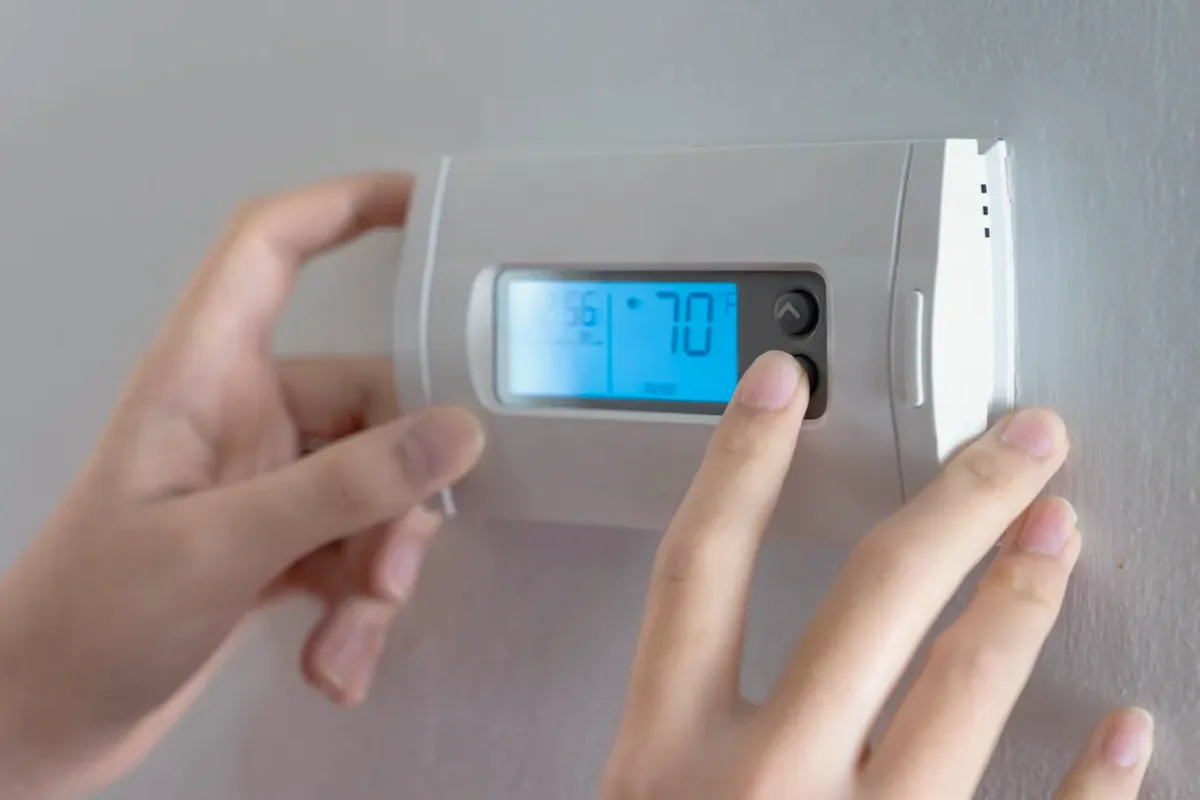
Request thermostat repair & replacement for a property in Huron County. Include the equipment, the problem or planned work, and your location so the request can be reviewed.
How can you determine whether a thermostat needs repair, replacement, or a system-side diagnosis?
A thermostat that does not hold a setting may be faulty, incorrectly wired, or responding to a problem elsewhere in the control chain. Compatibility depends on the heating and cooling equipment, the available wiring, and whether the system uses multiple stages or heat-pump controls. Some systems also have separate humidity control functions. If a property has experienced a power interruption, the desired restart behavior is worth discussing, but it does not establish that the thermostat itself needs replacement.
Record the thermostat model, displayed behavior, wiring configuration, and the equipment it controls. Testing should compare the thermostat's call for heat or cooling with the response of the furnace, heat pump, or other connected controls. This can reveal a thermostat fault, a compatibility issue, or a problem elsewhere in the control chain before replacement is considered.
Thermostat wiring and compatibility with furnaces and heat pumps.
Multi-stage controls and humidity-control compatibility.
Thermostat faults compared with sensors and other system controls.
Assessment and Scope
Questions for the Proposed Work
01
Verify compatibility before selecting a replacement
Thermostats differ in the wiring and control functions they support. A model suited to a single-stage furnace may not manage a multi-stage furnace or the heating and cooling stages of a heat pump. Humidity control also depends on compatible equipment and wiring. Checking the existing system diagram, terminal connections, and thermostat specifications helps establish whether a proposed replacement can control the equipment as intended.
02
Check the control chain before blaming the thermostat
A thermostat may display a setting correctly while another component prevents the system from responding. Comparing the thermostat's call with the equipment's response can help distinguish a thermostat or wiring fault from a furnace sensor, heat-pump control, or other system-side issue. The diagnosis should follow the connected control sequence rather than replacing a functioning thermostat based only on a comfort complaint.
03
Define repair, replacement, and restart behavior
If testing identifies a loose or failed thermostat connection, the repair scope differs from replacing a model that cannot support the system's stages. Replacement planning should verify wiring and equipment compatibility before choosing a smart or programmable control. Where a property has experienced power interruptions, ask how the selected control behaves after power returns and whether its settings persist. Internal electrical checks should be left to a qualified service professional.
Compare the next step
Describe the desired control outcome to each bidder, including scheduling, remote access, sensors, and existing equipment. Ask which interfaces or wiring changes are necessary. Compare setup and demonstrated operation with the installed appliances rather than treat every smart thermostat model as an equivalent replacement.
Thermostat wiring is not universal. Do not connect wires by colour alone or work on energized wiring; a compatible control must be configured for the equipment it serves.